Ready to transform your hiring?Your next great hire is waiting.
Your next great hire is waiting.
Let AI find them.
Join engineering teams who replaced week-long hiring cycles with hours. No credit card required.
Join engineering teams who replaced week-long hiring cycles with hours. No credit card required.
For most of a century, the university degree held a remarkable monopoly: it was the default proof of employability for white-collar work, not because it measured job skills well, but because nothing cheaper existed to check at scale. That monopoly is now visibly breaking. Nearly 70% of employers report using skills-based hiring practices, up steadily year over year, and the majority have displaced at least some credential screens in favour of directly evaluating what candidates can do. This is not a fashion - it is a repricing, and it is worth understanding what actually caused it.
Employers never really wanted degrees - they wanted what degrees loosely implied - trainability, persistence, baseline knowledge. The proxy was tolerable when verification was expensive. But proxies have costs: they exclude the self-taught, the career-changers, and everyone whose circumstances kept them from a credential, while guaranteeing little about the specific skills a role needs. The perennial employer complaint - a yawning gap between credentials held and skills needed - is the proxy failing in public.
Skills-based hiring did not win the argument. It won the cost curve.
The philosophical case against credentialism is decades old. What changed is technology: auto-scored assessments, structured AI interviews, and work-sample platforms made it economical to test actual ability for every applicant - something that once required human hours no employer would spend. When directly measuring the real thing costs less than filtering on the proxy, the proxy dies. That is where hiring is in 2026: an AI interview probing five job skills in twenty minutes, with evidence-linked scoring, is simply better information than the presence of a credential line on a CV.
For employers, the strategic question has moved from “should we hire on skills?” to “is our evaluation machinery good enough to?” - because a skills-first pipeline is only as fair and predictive as its assessments and interviews. For candidates, the message is bracing but hopeful: the gate guarded by pedigree is being replaced by a gate anyone can open - if they can do the work and are given a structured chance to prove it. Building that structured chance, at scale, is what this industry shift is really about.
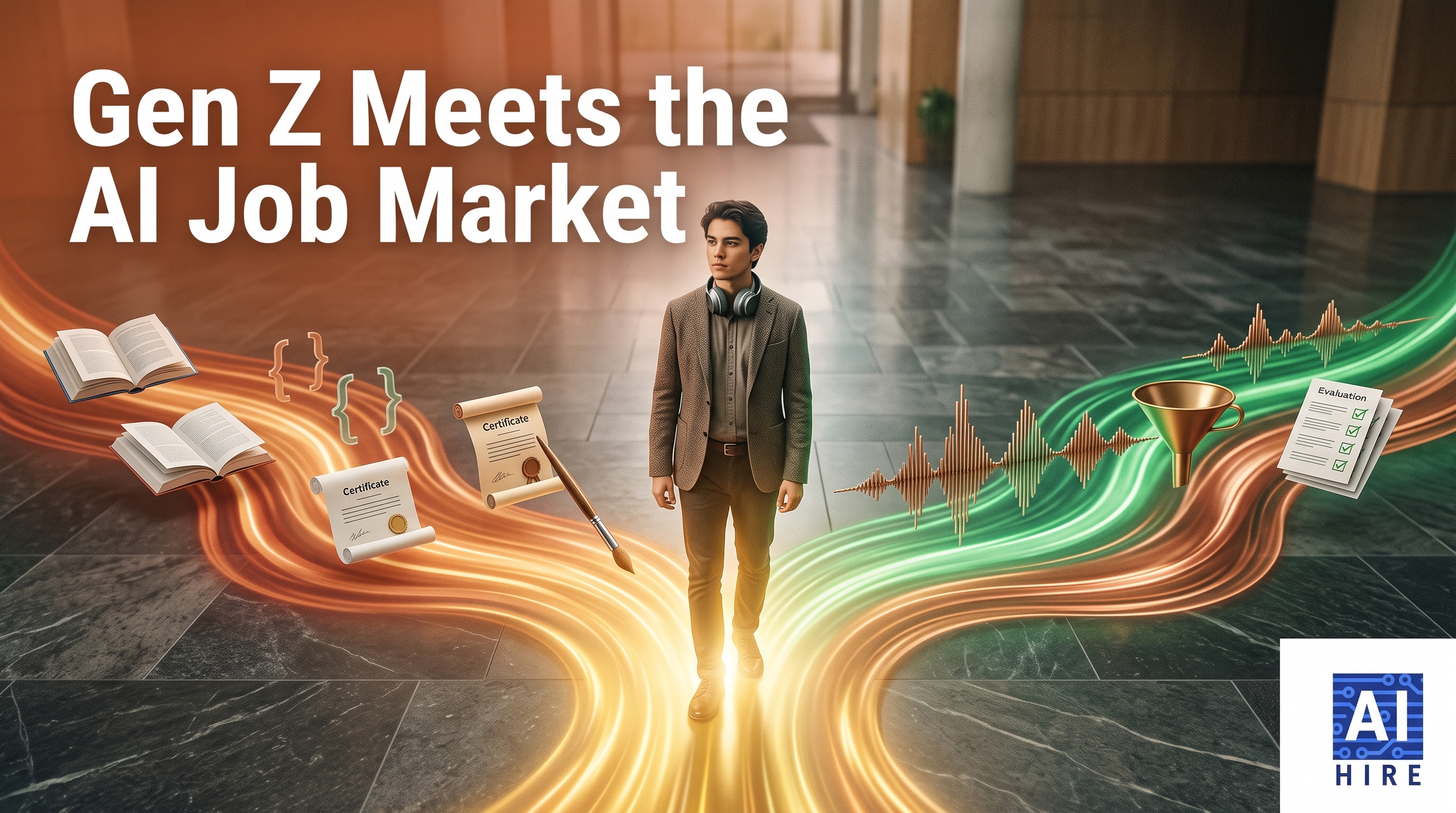
The most digitally native generation is colliding with the most automated hiring market in history. What the data says Gen Z actually wants - and why meeting it improves hiring for everyone.
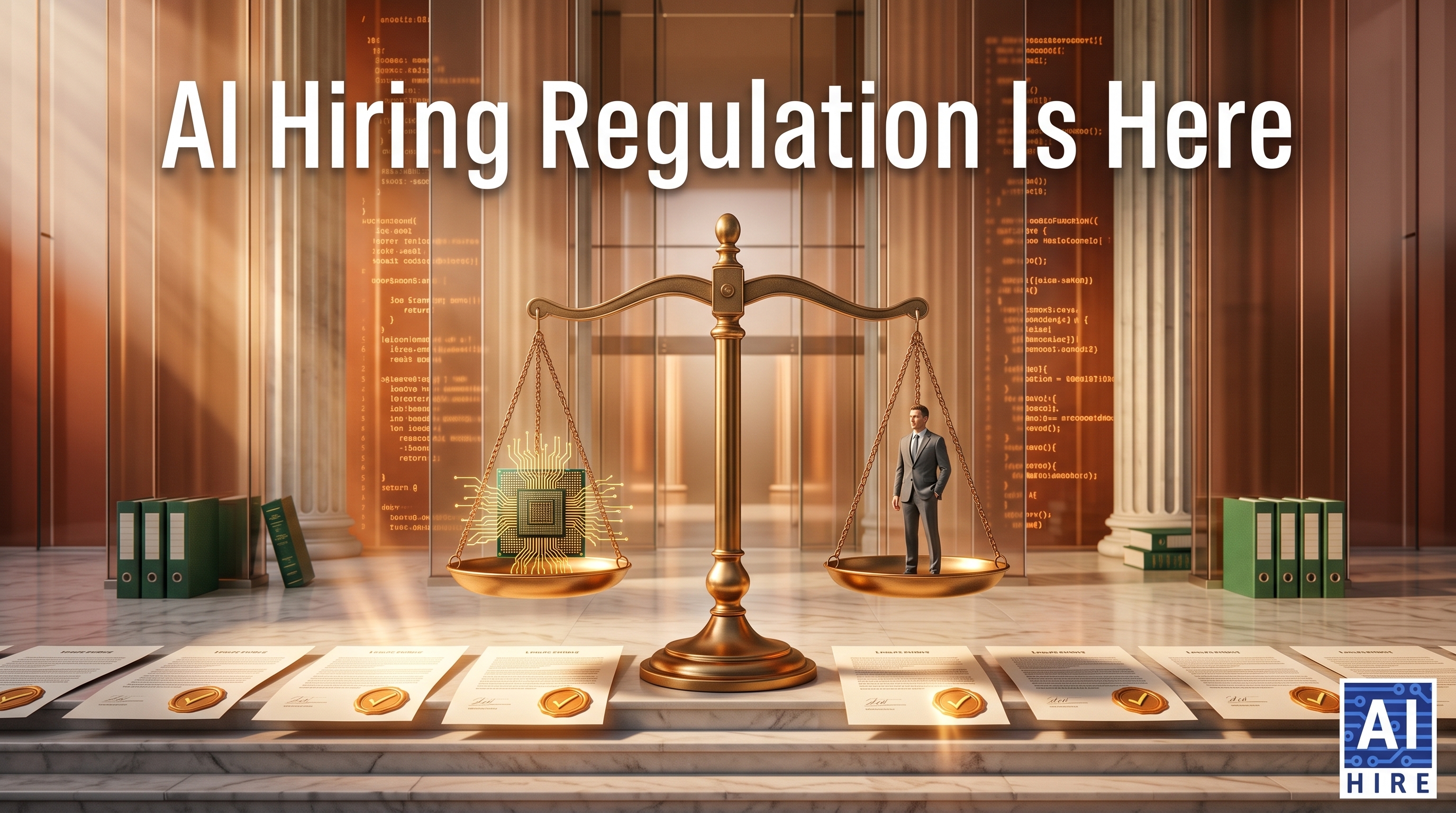
Between the EU AI Act, NYC Local Law 144, and spreading state laws, hiring is now among the most regulated uses of AI. What the rules require, and why they favour tools built honestly.

Entry-level postings are down 29 points since 2024 as AI absorbs the drudgery that once trained juniors. What is really disappearing, the paradox employers face, and how both sides adapt.