Ready to transform your hiring?Your next great hire is waiting.
Your next great hire is waiting.
Let AI find them.
Join engineering teams who replaced week-long hiring cycles with hours. No credit card required.
Join engineering teams who replaced week-long hiring cycles with hours. No credit card required.
The most consequential story in the 2026 labour market is happening at the bottom rung of the ladder. Entry-level job postings have fallen 29 percentage points since January 2024, and roughly three-quarters of employers hired the same number or fewer entry-level workers last year. The driver is no mystery: the routine tasks that historically justified junior headcount - first-draft writing, basic analysis, ticket triage, data entry - are precisely what current AI automates best. Among Gen Z workers, 61% worry AI will make it harder for their generation to enter the workforce at all. They are not wrong to worry. But the squeeze is also forcing a overdue redesign of how careers begin.
It is not junior people that AI replaces - it is the apprenticeship-by-drudgery model, where juniors earned their place doing repetitive work seniors did not want. When AI does the drudgery, the traditional on-ramp goes with it. Meanwhile healthcare, skilled trades, and other hands-on fields keep absorbing workers - the squeeze is concentrated in routine white-collar work.
Every company that stops hiring juniors is betting someone else will train their future seniors. That bet cannot pay off for everyone.
The mid-level talent of 2030 has to come from somewhere. Companies that maintain a genuine early-career pipeline are quietly accumulating an advantage that the hire-only-seniors crowd will pay for later - in salary premiums for scarce mid-level talent that nobody developed.
The new entry-level job is AI-supervisory from day one: juniors direct, verify, and correct AI output rather than producing first drafts themselves. That demands different skills - critical evaluation, domain context, communication - and job descriptions are slowly starting to say so.
Requiring two years of experience for an entry-level role was always absurd - in a market where juniors cannot get those years anywhere, it is self-defeating. Skills-based evaluation - assessments, structured AI interviews, work samples - lets employers detect the fast learners and critical thinkers directly, before they have a resume to prove it. This is exactly where modern hiring platforms earn their keep: when credentials cannot differentiate candidates who have none, demonstrated ability is the only signal left.
If drudgery no longer teaches, structure must: explicit mentoring, rotating real responsibilities, AI-assisted training environments where juniors practise judgment safely. The companies doing this report juniors reaching productive autonomy dramatically faster than the old sink-or-swim model - the ladder is not gone, it is just no longer built out of grunt work.
The honest advice for the class of 2026: target employers who test skills rather than count years - the skills-first funnel is your ally, since it is the one gate that does not require experience to open. Build verifiable proof of ability, get fluent at working with AI - the juniors being hired are the ones who arrive already supervising the machines - and take every structured interview as the opportunity it is: a chance to be measured on what you can do, which is the one thing the squeeze cannot take away.
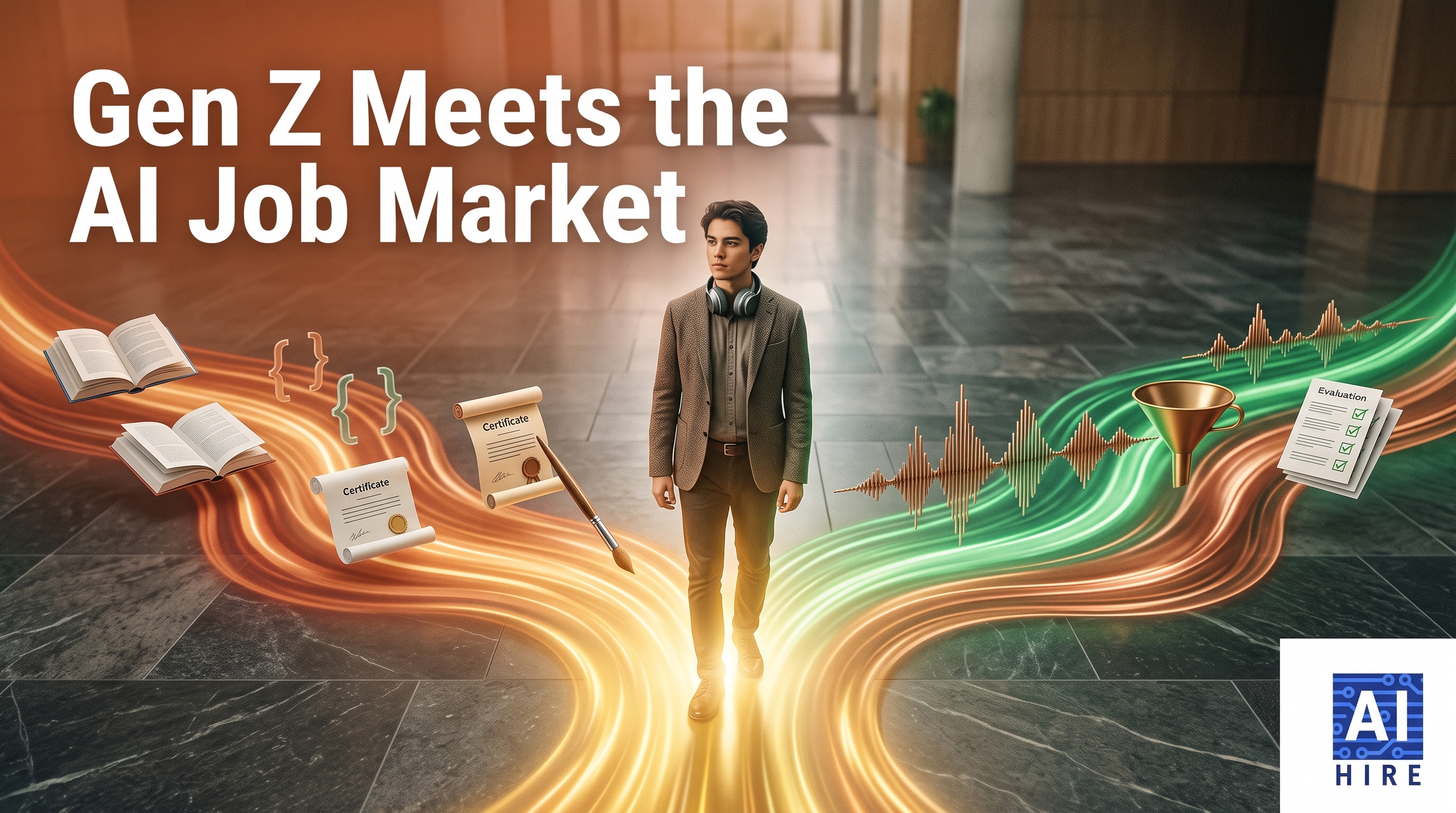
The most digitally native generation is colliding with the most automated hiring market in history. What the data says Gen Z actually wants - and why meeting it improves hiring for everyone.
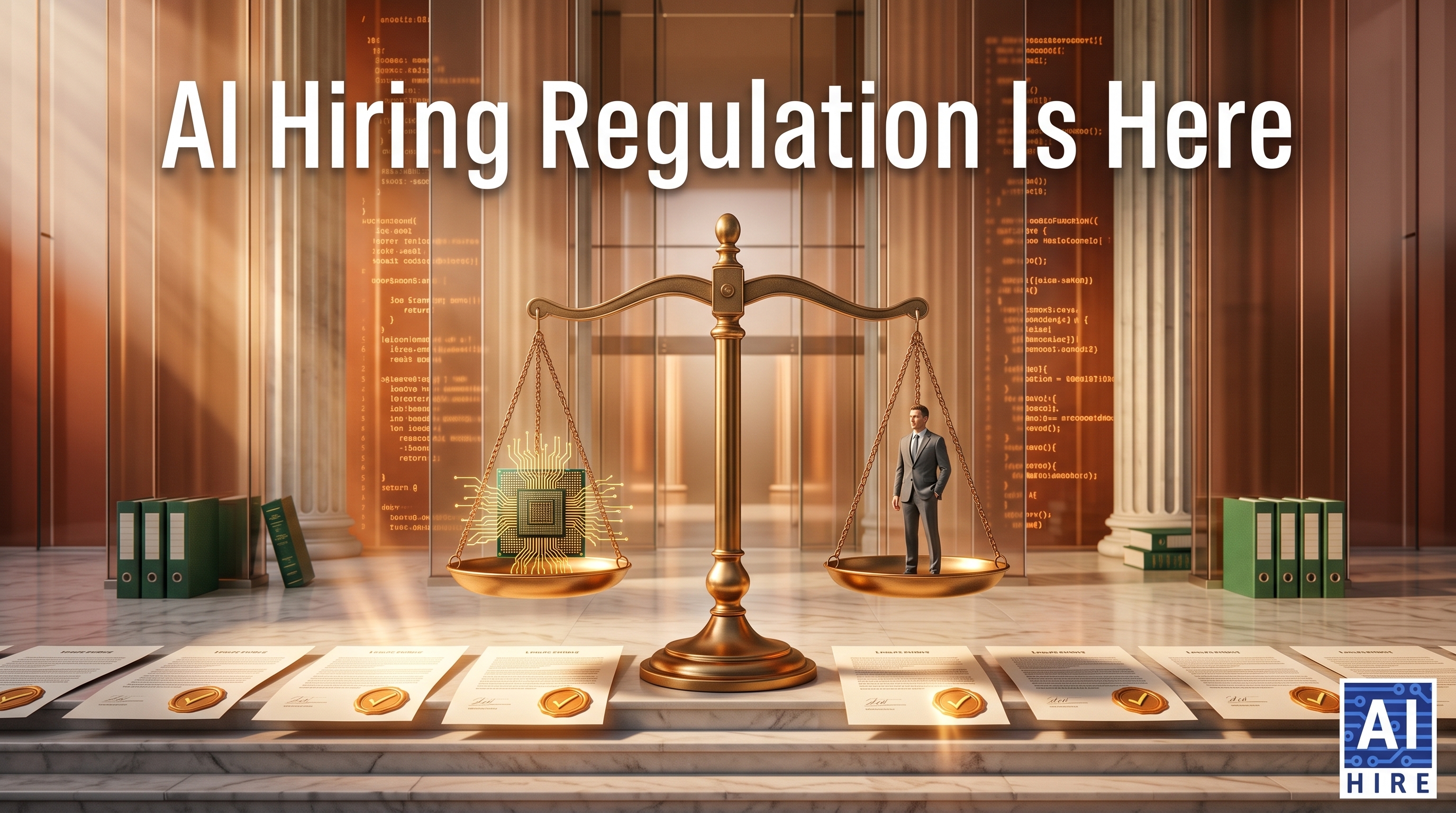
Between the EU AI Act, NYC Local Law 144, and spreading state laws, hiring is now among the most regulated uses of AI. What the rules require, and why they favour tools built honestly.
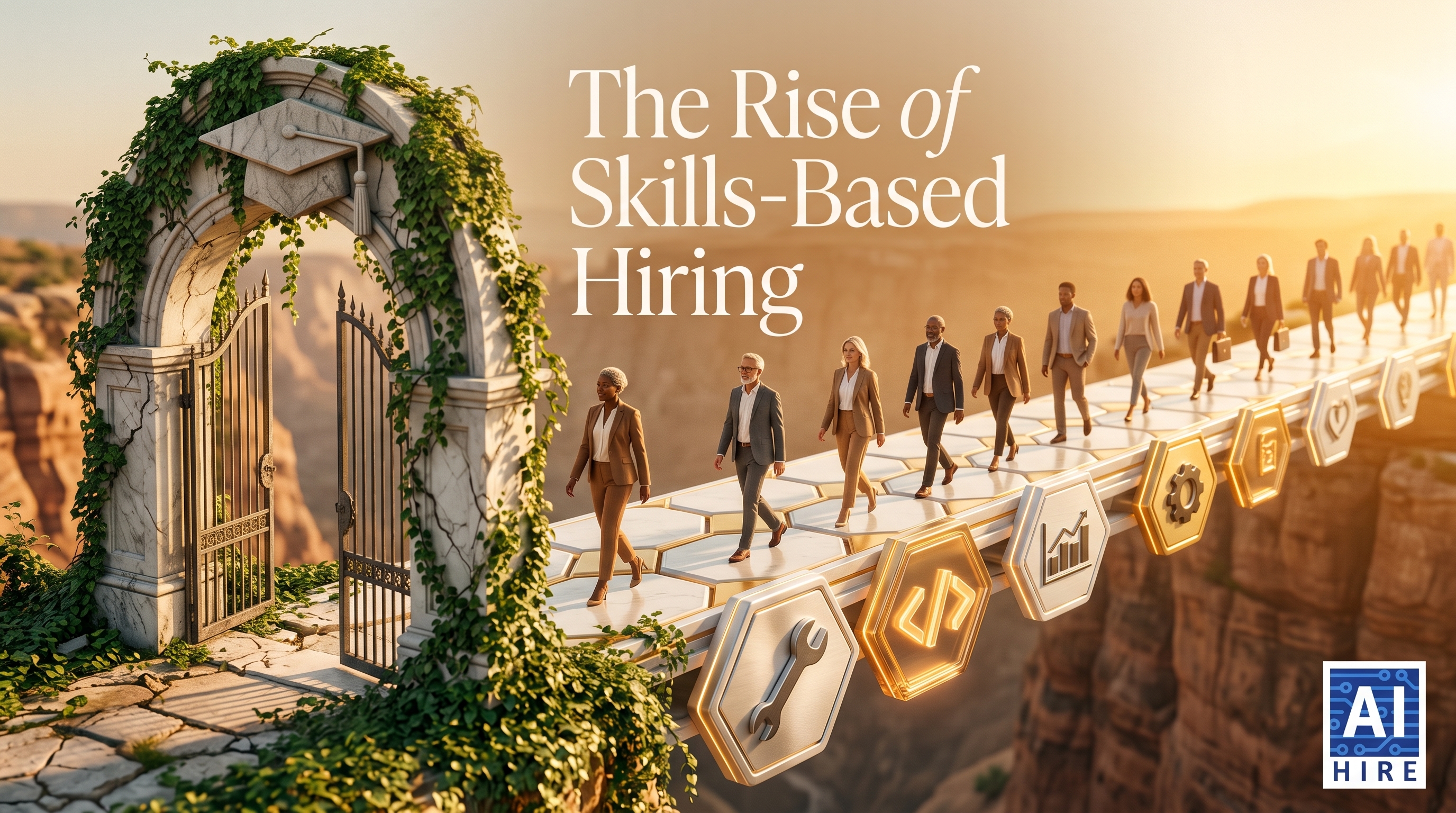
The degree was a proxy that survived because verification was expensive. AI interviews and auto-scored assessments made verification cheap - and the proxy is dying. What broke, the evidence, and what comes next.