Ready to transform your hiring?Your next great hire is waiting.
Your next great hire is waiting.
Let AI find them.
Join engineering teams who replaced week-long hiring cycles with hours. No credit card required.
Join engineering teams who replaced week-long hiring cycles with hours. No credit card required.
For years, AI in hiring operated in a regulatory vacuum: vendors made claims, employers bought tools, and candidates had little idea how they were being evaluated. That era is definitively over. Between the EU AI Act, New York City’s Local Law 144, and a growing patchwork of US state laws, automated hiring tools are now among the most regulated applications of AI anywhere - and every employer using them inherits obligations. Here is the map, and what to do about it.
The AI Act classifies AI systems used in recruitment - screening, ranking, evaluating candidates - as high-risk, with the corresponding obligations phasing in through August 2026: risk management, data governance, technical documentation, human oversight, and transparency toward the people being evaluated. Two provisions deserve special attention:
New York City’s Local Law 144 set the template: employers using automated employment decision tools must commission independent bias audits, publish the results, and notify candidates that automation is in use. State laws in Illinois, Maryland, Colorado and elsewhere add consent requirements for AI video analysis and broader algorithmic-discrimination duties. There is no federal statute yet - which in practice means multi-state employers build to the strictest applicable standard.
You are gaining enforceable rights: to know automation is used, to see published bias audits in some jurisdictions, and to expect human review of consequential decisions. Use them.
Regulation is not the enemy of AI hiring - snake oil is. The rules now arriving ban the pseudo-science, mandate the audits, and reward exactly the tools that were built honestly: structured, transcript-based, explainable, human-supervised.
The compliance burden falls hardest on systems that cannot explain themselves - emotion inference, opaque ranking, black-box rejection. Systems built on structured rubrics, evidence-linked scoring, and human-in-the-loop decisions - the AIHire.io design philosophy from day one - find the new rules describe what they already do. The regulatory era will consolidate the industry around evaluation that can be defended. That is good for employers, good for candidates, and, frankly, overdue.
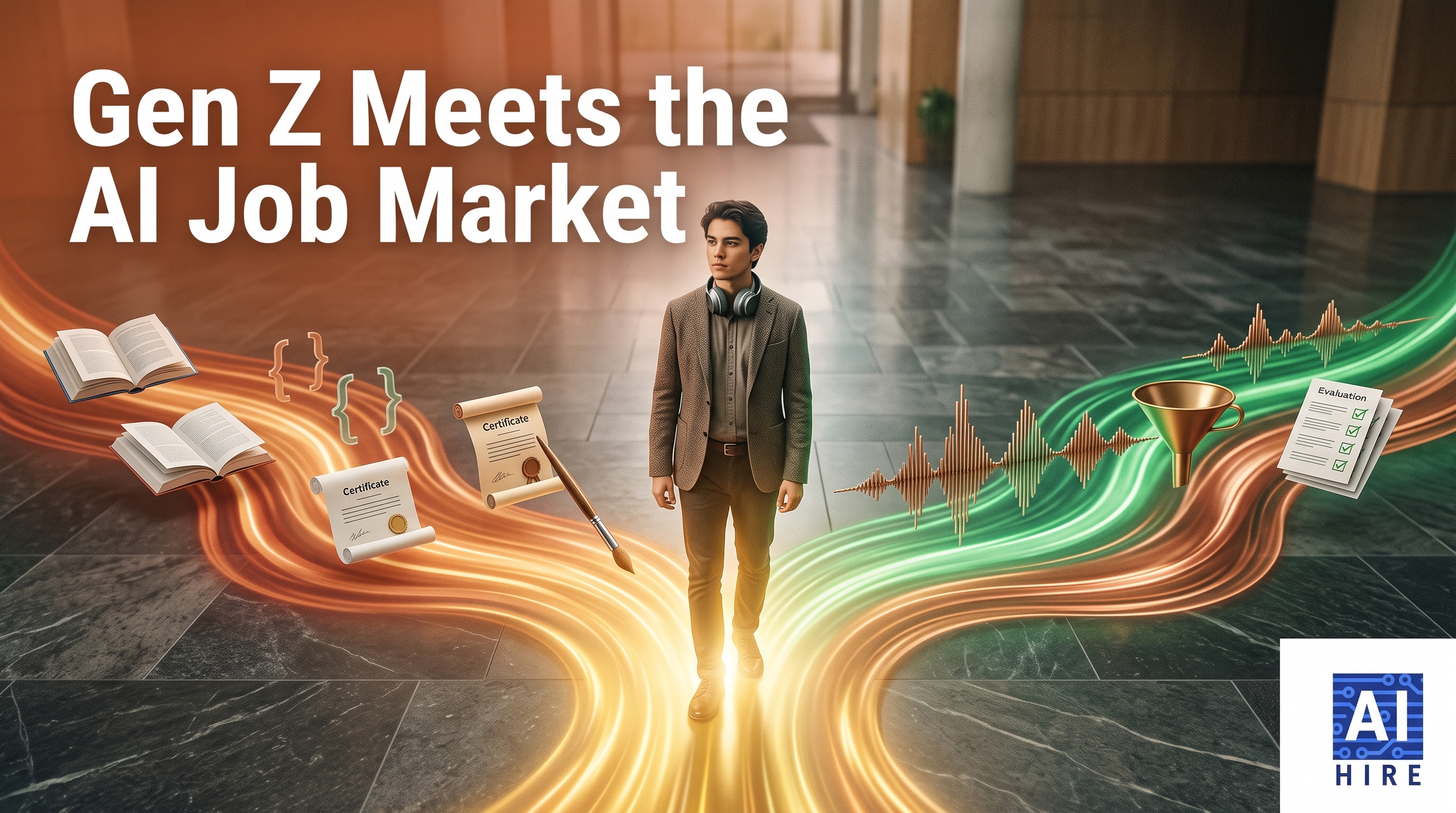
The most digitally native generation is colliding with the most automated hiring market in history. What the data says Gen Z actually wants - and why meeting it improves hiring for everyone.

Entry-level postings are down 29 points since 2024 as AI absorbs the drudgery that once trained juniors. What is really disappearing, the paradox employers face, and how both sides adapt.
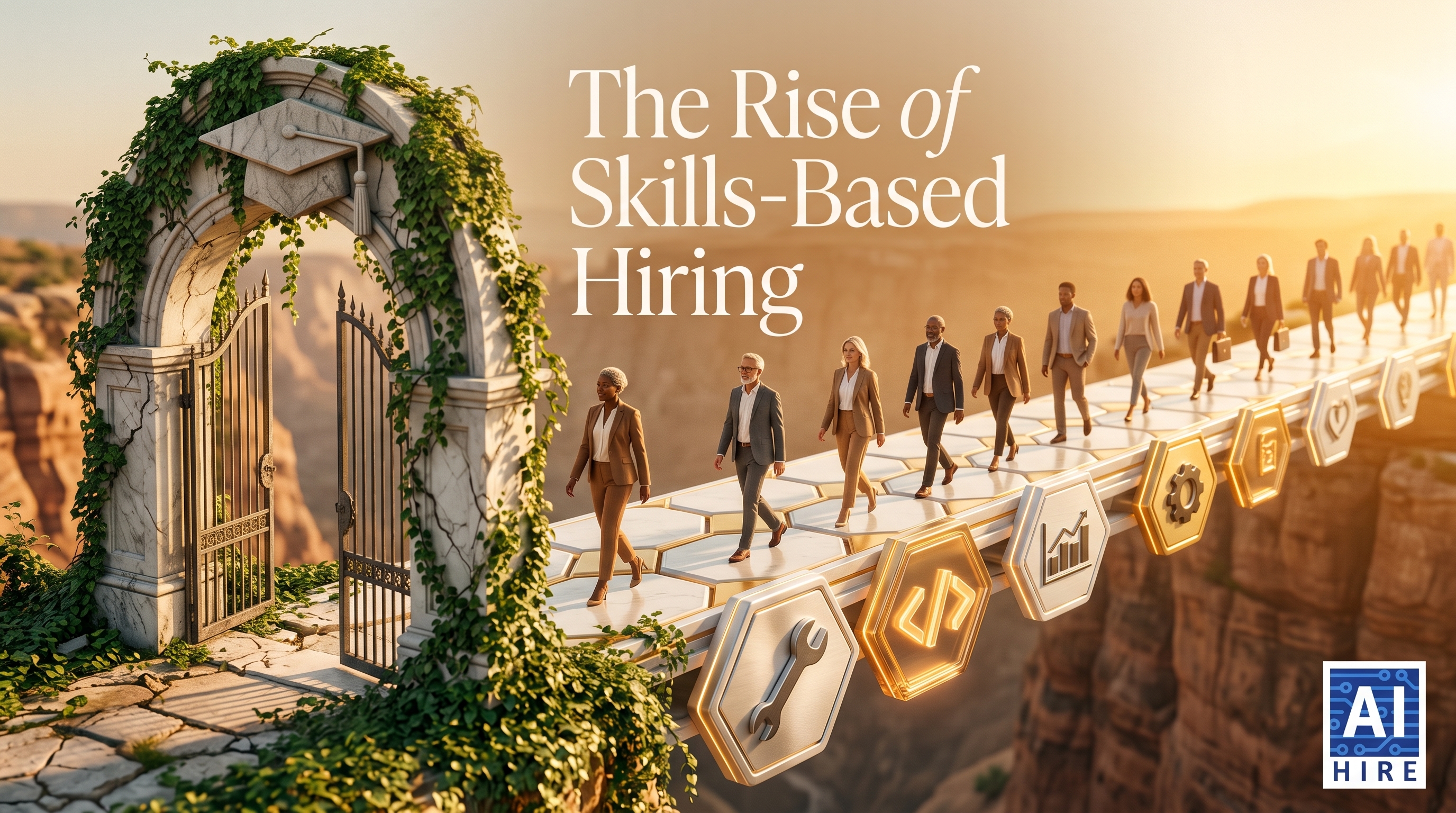
The degree was a proxy that survived because verification was expensive. AI interviews and auto-scored assessments made verification cheap - and the proxy is dying. What broke, the evidence, and what comes next.