Ready to transform your hiring?Your next great hire is waiting.
Your next great hire is waiting.
Let AI find them.
Join engineering teams who replaced week-long hiring cycles with hours. No credit card required.
Join engineering teams who replaced week-long hiring cycles with hours. No credit card required.
Hiring teams trying to figure out how to stop candidates from using ChatGPT during technical assessments are dealing with a major shift in technical recruiting. Traditional coding tests fail because large language models have memorized standard programming puzzles, algorithmic riddles, and LeetCode problems. When an applicant can copy a prompt, paste it into an AI tool, and get an optimal solution in seconds, a standard automated coding test stops measuring real engineering skill.
Preventing unauthorized AI assistance does not mean locking down applicant devices with invasive software. It means rethinking how you evaluate software engineers. If you shift the focus to debugging, system design, architectural trade-offs, and live spoken explanations, your assessments reward genuine problem-solving over prompt skills.
For more than a decade, technical screening relied on isolated problem-solving tasks. Candidates got a problem description, an empty code editor, and a set of unit tests to pass.
Large language models excel at exactly this format. Puzzles like reversing a linked list, finding the shortest path in a graph, or balancing a binary tree are published across the web. Models trained on millions of these snippets don't need to reason through the problem. They recall the optimal solution instantly, complete with time and space complexity.
So when hiring teams use these tests, high scores no longer track strong engineering talent. A candidate who struggles with basic software design can pass an automated screen with a perfect score just by feeding the problem statement to an external tool.
Many assessment providers responded to generative AI with browser locks, copy-paste blockers, and tab-switch monitoring. These signals are useful, but on their own they rarely solve the problem.
Candidates adapt to barriers that only add friction. If paste is blocked, an applicant can retype an answer from a second laptop, a tablet, or a phone. A second device on cellular data never shows up as a tab switch. Camera-based checks can catch someone looking away, but an automated flag with no context can't tell a candidate who is reading from a phone apart from one who is simply thinking.
The fix is not more surveillance. It is evidence a human can review. A flag is only useful when you can see exactly what happened at that moment and judge it fairly. You can learn more in our guide on how to prevent cheating in remote video interviews.
To build a screening process that AI can't easily game, change what you test and how you evaluate the answer. Here are practical ways to modernize technical screening.
Software engineers rarely write isolated algorithms from scratch. Most of their work is reading existing code, understanding dependencies, fixing subtle bugs, and adding features to an established system.
Instead of asking candidates to write a sorting function, give them a small codebase with an existing bug. Ask them to find it, explain why it happens, and fix it without breaking anything around it.
AI models struggle with multi-file context, hidden dependencies, and ambiguous business logic. A candidate who leans on an LLM will spend longer framing the context in a prompt than it would take to read the code and fix the issue directly.
Give candidates a working pull request that contains architectural flaws, poor naming, security vulnerabilities, or concurrency issues. Ask them to review it and write actionable feedback for a junior developer.
This exercise shows how an applicant thinks about maintainability, edge cases, and team standards. An AI tool can suggest generic style fixes, but an experienced engineer will spot how the changes affect production stability.
Large language models can produce standard architecture blueprints, but they can't weigh context-dependent trade-offs without a lot of human prompting.
Frame your questions around real operational constraints:
Ask follow-up questions that challenge the first answer. When an applicant has to defend their choices as requirements change, their real technical depth shows quickly.
The most reliable way to verify technical skill is to talk through the work in real time. Take-home challenges give dishonest applicants unlimited time to consult outside help. Live conversations require reasoning on the spot.
During a live technical assessment, ask candidates to explain their approach before they start typing:
A candidate relying on generated code will struggle to explain intermediate steps, justify design choices, or adapt when a new edge case comes up. Spoken follow-up questions quickly separate engineers who understand their code from those who copied an AI response.
Redesigning your questions is the foundation of modern technical hiring, but integrity monitoring still matters. Fair assessments need consistent standards for every applicant.
Good integrity monitoring produces evidence, not just alarms:
These safeguards give you evidence without asking applicants to install anything on their own machines.
Trying to stop candidates from using ChatGPT by banning technology outright is an uphill battle. The goal isn't to punish candidates for knowing that modern tools exist. It's to design evaluations that measure what an AI can't fake for them: understanding a system, debugging instinct, communication, and architectural judgment.
When you replace generic coding puzzles with real-world problems and live technical conversation, you protect your pipeline from automated cheating and find the engineers who will actually succeed on your team.
AiHire.io runs live AI technical interviews where candidates talk through their reasoning and write code in the same session, with a recorded integrity timeline your team can review. New accounts get $100 in free hiring credits to get started.
Traditional plagiarism checkers struggle with AI-generated code because large language models generate new variations rather than copying existing files verbatim. Specialized AI code detectors also suffer from high false-positive rates and can be bypassed by minor renaming or formatting changes.
Some companies allow AI tools as long as the assessment tests higher-level tasks like architecture, debugging, and code review. If you permit AI, design the test around realistic problems where code generation is only the starting point, not the final answer.
Practical codebases with intentional bugs, code review exercises, and live technical discussions are the most effective alternatives. They measure real engineering workflow, system comprehension, and problem-solving without being vulnerable to simple prompt copying.
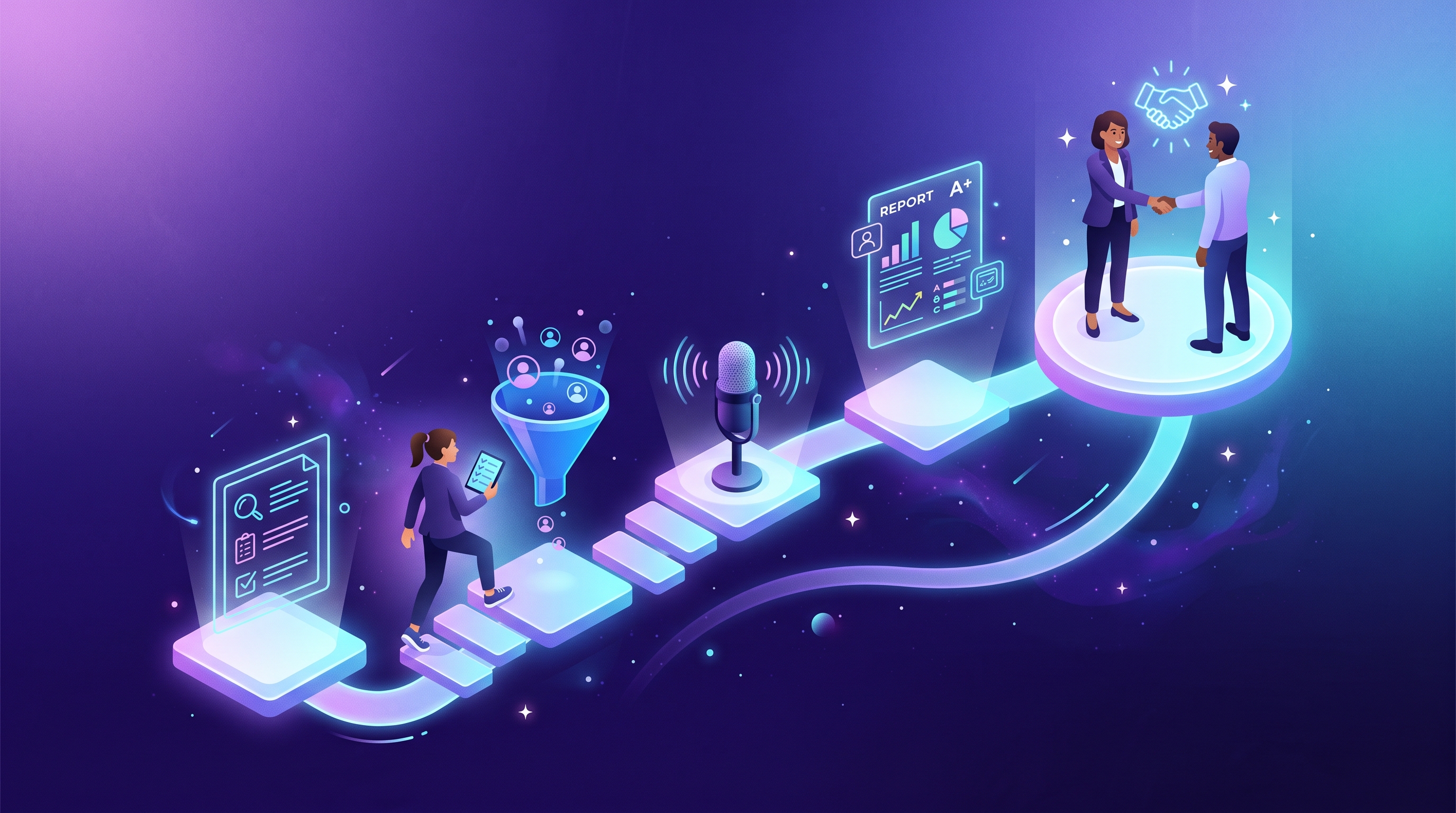
AI interviews reward good setup. A practical five-step playbook for your first AI-powered hiring round - from writing the job as an evaluation spec to reading reports like a pro.
Read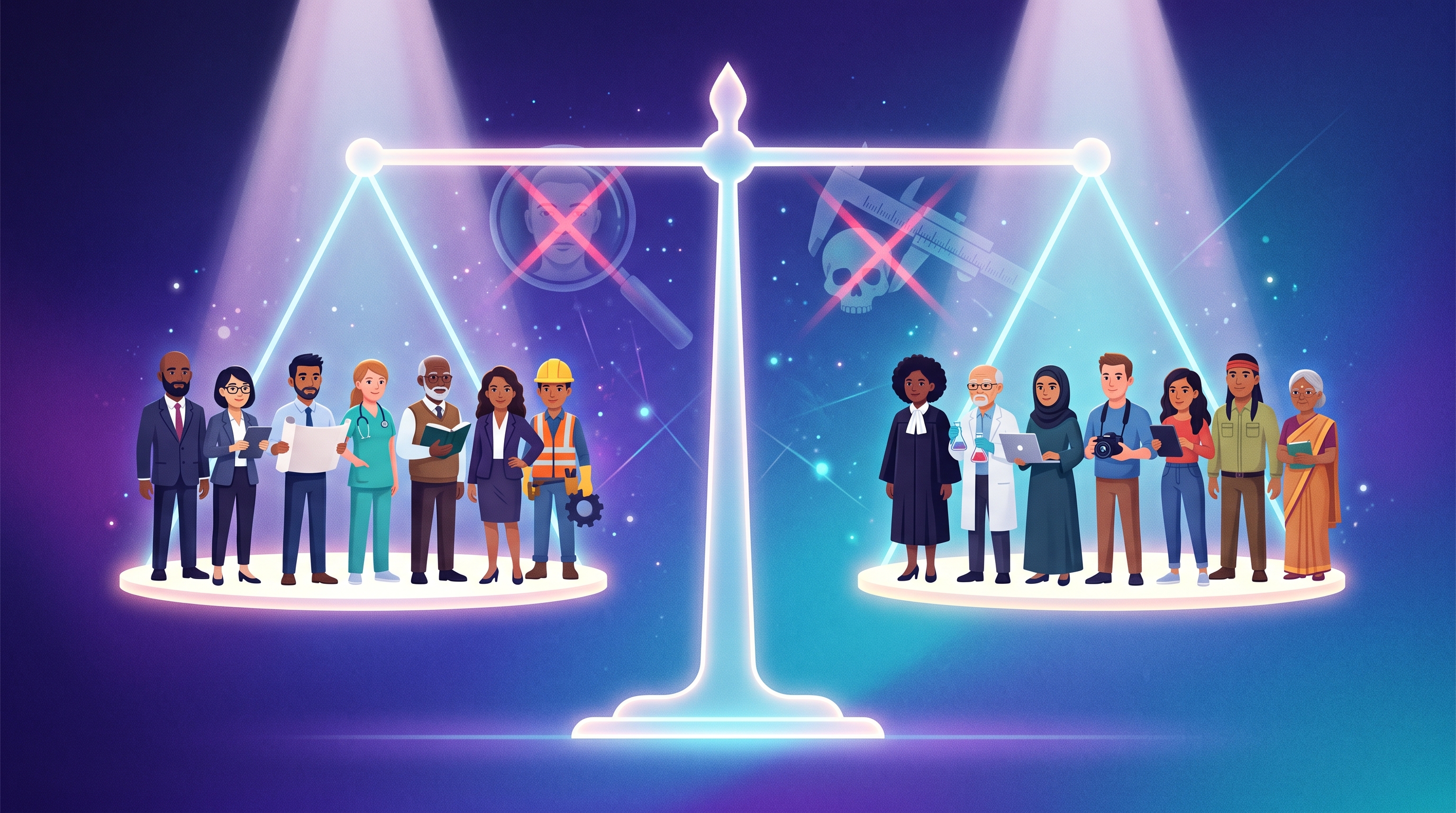
AI in hiring gets called both the cure for bias and its amplifier. Both claims are half-true. What actually determines the outcome is a short list of design choices.
Read
If an AI interview influences who gets hired, its scoring should not be a black box. A step-by-step look at how a live conversation becomes a structured, evidence-backed report.
Read